Lobuche Peak climbing
Trip Facts
 Duration
15 Day
Duration
15 Day
 Trip Grade
Moderate
Trip Grade
Moderate
 Maximum Altitude
6119 m
Maximum Altitude
6119 m
 Group Size
1-16 People
Group Size
1-16 People
 Starts
Kathmandu
Starts
Kathmandu
 Ends
Kathmandu
Ends
Kathmandu
 Activities
Trekking/climbing
Activities
Trekking/climbing
 Best Time
March.April.May | Sep. Oct.Nov
Best Time
March.April.May | Sep. Oct.Nov
Overview
Lobuche Peak climbing was designed for trekkers who didn’t want to climb a peak on their own. The climb combines the Everest base camp trek, which is all about leaving the busy city and climbing to the viewing points (which are quite popular) of 6,000 meters tall peaks. Lobuche peak is located in the Khumbu region and is 6119 m.
The trek starts in Kathmandu and continues with an exhilarating flight to Lukla, followed by a trek through the Everest region. The trek continues through traditional Sherpa villages on the way to Lobuche, giving the trekker a chance to witness and experience the lifestyle and hospitality of the Sherpas. The trek is also filled with views of Everest and the surrounding peaks.
Another major highlight of the trek is the base camp itself. The trail leading to Lobuche from base camp winds through the dramatic landscape of the Khumbu and offers all the features and elements of the high mountains-from alpine forests and rocky and barren trails to glacial valleys. Reaching base camp also enhances the trek and provides a view of one of the most sought after mountaineering destinations.
The climbing section requires physical fitness and some experience with basic mountaineering skills. After reaching Lobuche high Camp, you will acclimatize and prepare for the summit under the guidance of climbing Sherpas. The climb will likely be steep and will include some sections that have snow and ice, as well as some mountaineering challenges, like walking with crampons, dealing with ropes, and using an ice axe. Summit day is extremely gruelling, as we will likely have to wake up very early to get the best weather conditions. As you stand on top of Lobuche Peak, surrounded by the 8,000 meters tallest mountains on earth, the reward is worth the effort.
Reaching the summit of Lobuche Peak is only a portion of what the trip entails. The adventure brings trekking in the Himalayas, mountaineering, appreciation for the Sherpa culture, amazing scenery, and the feeling of personal accomplishment. Climbing Lobuche Peak, when properly acclimatized and physically prepared with proper gear and guided by people with experience and a great deal of caution for the conditions, is a wonderful introduction for those aspiring to climb higher mountains in the Himalayas.
Lobuche Peak climbing is perfect for those either looking for a new adventure or an aspiring climber wanting to summit their first 6,000 meters peak. The central part of the adventure is the opportunity to push beyond your limits in the Everest region. The adventure is a once in a lifetime experience that is sure to leave you with great memories.
Highlights
- Climb Lobuche Peak at 6,119 m (20,075 ft)
- Hike through once-in-a-lifetime iconic trekking routes in the Everest region
- Get to Everest Base Camp and Kala Patthar
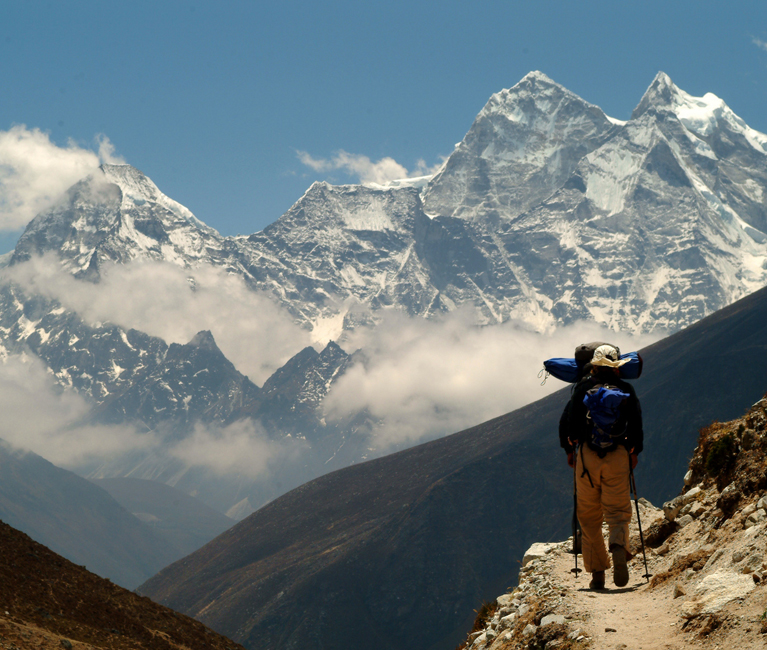
- See fantastic views featuring Everest, Lhotse, Nuptse, and Ama Dablam
- Train your glacier and snow climbing skills
- Get to know the Sherpa villages and their culture
- Get to know the Tengboche Monastery
- Cross the Kumbhu Glacier
- Have the time of your life on an incredibly high-altitude Himalayan trek
- Bring your climbing skills to one of the many 6,000-meter trekking peaks in Nepal
Itinerary
Day 1: Arrival Kathmandu and Hotel Transfer

 Transportation: car
 Accommodation: 3 star hotel in kathmandu
 Activities: Pick up
 Maximum Altitude: 1300 m
After landing at Tribhuvan International, you will be greeted by our team and transferred to your Kathmandu hotel. You have time to unwind from your journey. If you arrive early enough, you can visit nearby points of interest and/or meet your climbing team for a brief orientation. You will stay overnight in Kathmandu.
Day 2: Fly to Lukla & Trek to Phakding
Transportation: airplane
 Travel Duration: 3 hrs
Accommodation: local tea house
Activities: flight/ trek
Maximum Altitude: 2610 m
Travel Duration: 3 hrs
Accommodation: local tea house
Activities: flight/ trek
Maximum Altitude: 2610 m
Today you take a flight from Kathmandu to Lukla. These flights tend to have incredible views of the Himalayas. After landing in Lukla, you will meet the rest of your trekking crew before you head into the Everest region. The trek to Phakding passes through Sherpa villages, forests and has some stunning views of the mountains. You will stay in a teahouse for the night in Phakding.
Day 3: Trek to Namche Bazaar
Transportation: on foot
Travel Duration: 5-6 hrs
Accommodation: local tea house
Activities: Trekking
Maximum Altitude: 3440 m
 Highlights: walking
Today your trek follows the Dudh Koshi River and passes through both rhododendron and pine forests. You'll also cross several exciting suspension bridges. Entering Sagarmatha National Park, the trail ascends toward Namche Bazaar. The town is an energetic Sherpa village and is surrounded by the stunning peaks of the Himalayas. You will stay overnight in a teahouse.
Day 4: Hike to Namche Bazaar Acclimatization Day
Transportation: on foot
Travel Duration: 3-4 hrs
Accommodation: local tea house
Activities: hiking
Maximum Altitude: 3380 m
Highlights: To Everest
This day is for acclimatization. Your first option for the day is a hike with breathtaking views. This view includes Everest, Ama Dablam, Lhotse, and other peaks. This hike is to the Everest View Hotel. Another option is to stay in Namche Bazaar, visiting shops and learning about the Sherpa culture. Stay in a teahouse for the night.
Day 5: Trek to Tengboche
Transportation: on foot
Travel Duration: 5-6 hrs
Accommodation: local tea house
Activities: trekking
Maximum Altitude: 3,860m
This leg of the trek is gradual climbing up and down, leading to the crossing of the Dudh Koshi River. After crossing the river, the trek continues up to the village of Tengboche, famous for the monastery. This is the most important monastery of the Buddhist faith in the Khumbu region. The views from here of Ama Dablam and the surrounding peaks are breathtaking. Spend the night in a teahouse.
Day 6: Trek to Dingboche
Transportation: on foot
Travel Duration: 4-5 hrs
Accommodation: local tea house
Activities: trekking
Maximum Altitude: 4,410m
After leaving the lower valleys, the trek enters Dingboche. This trek continues through Pangboche and the Imja Khola Valley. The views on this leg, including of Lhotse and Ama Dablam, are still very impressive. Dingboche is a common stop for acclimatization before continuing to Lobuche. Spend the night in a teahouse.
Day 7: Acclimatization Day in Dingboche
Transportation: on foot
Travel Duration: 3-4 hrs
Accommodation: local tea house
Activities: hiking
Maximum Altitude: 4,410m
Another one of your bodies gets to adjust to high altitude, so all you have to do is a very short hike, which this time goes to a ridge that provides splendid views of all the surrounding mountains. To hike, you have to rest, hydrate, and mentally prepare. Take time to check your climbing gear, and prepare your body for the challenging parts of the hike that are yet to come. Overnight at a teahouse.
Day 8: Trek to Lobuche
Transportation: on foot
Travel Duration: 4-5 hrs
Accommodation: local tea house
Activities: trekking
Maximum Altitude: 4,910m
This is your first real day in the high altitude, rugged, difficult terrain of the Everest hiking region. The landscape begins to change, as the deep Thukla Pass and glacial valleys begin to dominate. You will get to hike through a series of memorials for climbers who passed while attempting to hike the Himalayas. After the memorials, you will continue to the town of Lobuche. You will also be hiking among some stunning and intimidating rock faces. Overnight at a teahouse.
Day 9: Trek to Gorak Shep (5,140 m) & Hike to Everest Base Camp (5,364m)
Transportation: on foot
Travel Duration: 6-7 hrs
Accommodation: local tea house
Activities: trekking
Maximum Altitude: 5364 m
This high altitude trek takes you along the rocky landscape. The destination for today is Gorak Shep. You will be taking a very short rest in Gorak Shep, because you will be continuing on the trail to Everest Base Camp. This section of the glacier is very rewarding, as you are about to achieve one of the major expedition highlights. It offers stunning and majestic views of the surrounding peaks and glaciers. After Base Camp, you will begin your trek back to Gorak Shep, but the climbing team will have other lodging and expedition plans for you.
Day 10: Trek to Lobuche High Camp
Transportation: on foot
Travel Duration: 6-7 hrs
Accommodation: tented
Activities: trekking
Maximum Altitude: 5200 m
What was once trekking is now mountaineering. From here, head to Lobuche High Camp, where the path gets steep, rugged, and tricky. After arriving in high camp, your climbing guide will explain the essentials and check your high altitude mountaineering gear. Use this time to rest, and remember to hydrate and prepare for a quick summit launch. Overnight in high camp.
Day 11: Summit Lobuche Peak (6,119 m) & Descend to Thukla
Transportation: on foot
Travel Duration: 9-10 hrs
Accommodation: local tea house
Activities: climbing
Maximum Altitude: 6119 m
This is by far the most rewarding and difficult day. You will need to wake up early to start this trek. After the guide gives the go-ahead, ascend with the aid of your climbing team and use of climbing gear (CRAMPONS, harnesses, ropes, etc.) through snow and icy terrain. After navigating through the last of the tough sections, you will reach the summit of Lobuche Peak, which is at 6,119m and be blessed with a once-in-a-lifetime view of the adjacent Himalayan peaks along with views of Everest, Lhotse, Nuptse, Ama Dablam, and Pumori. After descending, begin the trek to Thukla for some well earned rest. Overnight in a teahouse.
Day 12: Trek to Namche Bazaar
Transportation: on foot
Travel Duration: 6-7 hrs
Accommodation: local tea house
Activities: trekking
Maximum Altitude: 3,440m
To descend to Namche Bazaar after the tiring summit day. Much of the first part of the day will be view trekking, as you recognize the shapes and trail of the Khumbu Sherpa settlements. All of the mountains will be a dark and barren grey as the altitudes gain life from the reduced air pressure. Arrive at Namche Bazaar to rest for the long journey ahead. Overnight in a teahouse.
Day 13: Trek from Namche Bazaar to Lukla
Transportation: on foot
Travel Duration: 5-6 hrs
Accommodation: local tea house
Activities: trekking
Maximum Altitude: 2,800m
Today is the last day of trekking. Follow the route down, passing through both forests and traditional Sherpa villages, and crossing various other suspension bridges. Once you cross the Dudh Kosi River, continue on through several more villages, and make your way to Lukla. Enjoy the chance to ring the bell and let the other tourists know you have finished the trekking and climbing challenge, and spend the night in one of the many teahouses in Lukla.
Day 14: Fly to Kathmandu & Transfer to Hotel
Transportation: airplane
Travel Duration: 35 minutes
Accommodation: 3 star hotel
Activities: flight
Maximum Altitude: 1300 m
An extra early morning flight to Kathmandu from Lukla gives one last chance to see the beauty of the Himalayas from the air. After landing, you are taken to your hotel. You have the rest of the day to yourselves, with the option to explore the city and find some last minute gifts, or enjoy a farewell dinner in Kathmandu. Enjoy another night in your hotel.
Day 15: Transfer to Tribhuvan International Airport - Departure
 Transportation: drive to airport
Activities: droup off
Transportation: drive to airport
Activities: droup off
Today is the final day of the impressive Lobuche Peak experience. One of our team members will take you to the airport, according to your flight time. We hope you leave with many great memories from your time in the Everest region, and with one of your many Himalayan climbing experiences.
Essential Information
Best Time for Lobuche Peak Climbing
Spring (March - June) and fall (September - November) are the best seasons for Lobuche Peak climbing. These times of year offer stable and pleasant weather; thus, April, May, October, and early November are optimal for attempting the peak. The rest of the year brings heavy snow and ice (Winter) or Monsoon rains, clouds, and flooding while severely disrupting transportation (Monsoon). All these conditions make climbing unfavourable. The best views and the best climbing conditions are in the crisp air of Autumn after the Monsoon.
Difficulty Level
Joining Lobuche Peak climbing is a high level challenge. The combination of high peak trekking (approx. 6,119 m / 20,075 ft above sea level) and additional technical climbing at the peak makes this an even greater challenge due to the weather and frost affecting accessibility and the oxygen level.
The trek is largely very demanding, but manageable for those in good shape. The trek requires a higher level of focus and a greater familiarity with vertical and steep terrain. Depending upon the weather and ice, advanced climbing gear may be required, including crampons, an ice axe, harness, ropes, and other climbing equipment on snow and icy terrain. This climb requires Sherpa guides and a very high level of fitness and preparation.
Can a beginner join this trip?
Yes, in addition to being fairly fit, Lobuche Peak climbers need to be adequately prepared and supported. Participants should have had some prior experience with trekking, especially trekking at high altitudes. However, it is not very common for beginners, even those who are not very experienced, to have to rely on their advanced climbing skills at high altitudes.
It is best for beginners to have good leg strength and good cardiovascular fitness, mental fortitude, and the ability to withstand the demands of the long trek up. The ability to use an ice axe as well as traverse using crampons and rope is a requirement for any beginner. The climbing itinerary will be designed to slope at a gradual incline, allowing time for proper acclimatisation to the high altitudes.
Restricted to trek climbers, Lobuche peak provides the best way to begin your serious training in Himalayan climbing.
Acute Mountain Sickness
Of all the dangers associated with climbing Lobuche peak, altitude sickness is the most serious due to the peak's height of above 6000m. At high altitudes, Mountain Sickness occurs when the body has not adapted to the lack of oxygen.
Sickness in these conditions is characterised by sudden fatigue, loss of appetite, headaches, nausea, and an inability to sleep, all of which are symptoms of mountain sickness. Slow and steady travel, frequent adequate hydration, and proper acclimatisation all break the steep altitude gain.
The itinerary will have acclimatization days, especially at Namche Bazaar as well as Dingboche. Acute mountain sickness and its symptoms should be communicated to a guide with no delays. The only safe cure for altitude sickness is a descent to a lower altitude.
Walking Time per Day
The daily trekking schedule depends on many factors including the daily walking route, elevation, terrain, and the acclimatisation schedule. Expect 5-7 hours of trekking with several days of shorter acclimatisation treks.
Expect a longer trek for summit day. Most trekkers will begin the ascent roughly 8-12 hours earlier than the descent. This time will vary based on weather and snow conditions, but will ultimately depend on an individual’s fitness level and the pace at which the group climbs.
The intent is to conserve as much energy as possible for the summit attempt and higher sections of the climb. Expect a steady pace over a quick one.
Accommodation/food
Trekking along the Everest region trail, most overnight accommodations will be in tea houses and lodges. Rooms can often be barren with nothing more than a shared bathroom, a mattress and a bed. The higher you go, the more basic the amenities become. The dining areas may have the only heat in the lodge or tea house.
Trekking lodges may serve a variety of Nepali, Tibetan, Indian and Western meals, including: bhat, noodles, rice, potatoes, soup, veggies, eggs, bread, and porridge. Dal bhat is the best choice due to its filling nature and a variety of sides which often include lentils.
Expect to sleep in a base camp-style tent at Lobuche for the climbing section, depending on which expedition package you choose. Bring enough water to stay adequately hydrated throughout the trek.
Permits
To ascend Lobuche Peak, several permits and approvals are required. These typically consist of a Lobuche Peak climbing permit, a Sagarmatha National Park entry permit, and a Khumbu Pasang Lhamu Rural Municipality permit.
The climbing permit and associated fees may depend on the season and the present regulations. The permit process is typically managed by a professional trekking and climbing company, and the required documentation is prepared and arranged prior to and during the expedition.
Since regulations and fees may be subject to change, climbers should check the most recent information before departing.
What to Expect
Lobuche Peak Climbing is a complete Himalayan expedition, and not just a trek to a summit. This adventure presents the opportunity to view and experience amazing mountain scenery, Sherpa villages, monasteries, high altitude, ice, glaciers, and challenges of an exciting adventure.
This trek climbs through the well-known locations of Namche Bazaar, Tengboche, Dingboche, Lobuche, Everest Base Camp, and the Khumbu Glacier, all the while producing breathtaking views of Everest, Lhotse, Nuptse, Ama Dablam, and Pumori, as well as other giants of the Himalaya.
The last summit push is most likely to be the most difficult section of this adventure, and looking over the magnificent Everest region from 6,119 meters is most likely one of the most beautiful views in all of trekking and mountaineering.
With proper preparation and responsible, good, and high-quality equipment, Lobuche Peak Climbing is an excellent adventure that can be challenged by any person who is adventurous and a bit bold.
Why Choose Sherpa Trailblazers?
The safety and professionalism of our Sherpa Trailblazers climbing teams are our priority for our Nepal Himalayan climbing expeditions. Lobuche Peak is a difficult trek. An experienced team is vital for high-altitude expeditions. Our Sherpa Guides have the skills and the training for the Everest region, as well as the cultural knowledge and the challenges of high altitude climbing.
We place the highest value on safety, proper acclimatisation, and personalised services, as well as responsible adventure tourism, at every step of the journey. Our team supports every aspect of travel, from the necessary preparations in Kathmandu, flight arrangements to Lukla, and the trek, acclimatisation, climb training and the summit attempt (as well as the descent).
Sherpa Trailblazers combines experienced climbing guides, great logistics, well-planned itineraries, and local expertise, leaving you to concentrate on the adventure. Our aim is not only to reach a summit, but also to achieve a safe, fulfilling, and enjoyable Himalayan experience.
Alternative Routes for Lobuche Peak Climbing
While the classic route follows the trail to Everest Base Camp, there are other options for Lobuche Peak climbing that take into consideration your time, interests, and level of trekking experience.
Everest Base Camp Route
The Everest Base Camp Route is the most popular option, as it combines an ascent of Lobuche Peak and a visit to Base Camp, as well as Kala Patthar. This route is perfect for those wishing to do both trekking and climbing within the Everest region.
Gokyo Valley and Lobuche Route
You can make the trek more complex by adding the Gokyo Valley and perhaps the Cho La Pass before Lobuche. This route takes you to beautiful lakes and glaciers and an alternate, less traversed approach to the peak.
Shorter Lobuche Peak Itinerary
For very fit trekkers who have less time, a more direct itinerary focusing mainly on Lobuche Peak, and not the full trek to Everest Base Camp, can be chosen. However, acclimatisation should always come before time.
Everest Three Passes Combination
For highly fit and very experienced trekkers, Lobuche Peak can also be part of the Everest Three Passes Trek, making for a challenging trip through some of the most beautiful and high landscapes in the Khumbu.
The availability and suitability of alternative routes depend on the weather, trail, and climber's experience. An experienced climbing guide should assess the route before departure.
FAQs
How hard is Lobuche Peak climbing?
Lobuche Peak climbing consists of combining trekking and climbing at a reasonable level of difficulty. Physical and mental fitness are a necessity, along with endurance and a degree of basic climbing skills. Proper accommodation and a solid climbing team are a must.
Can a beginner join Lobuche Peak?
Yes, if extremely fit and well prepared, it is indeed possible for a beginner to attempt Lobuche Peak under professional guidance. Having prior high altitude trekking experience is useful, along with having some basic training in skills such as crampons, ice axe, harness, and climbing ropes.
When are the best seasons for Lobuche Peak climbing?
The ideal seasons for climbing Lobuche Peak are Spring (March to May) and Autumn (September to November). During these times, weather is more predictable and generally good, along with clear skies and mountain visibility, with more favourable conditions for summit attempts.
What is the elevation of Lobuche Peak?
The elevation of Lobuche Peak is approximately 6,119 meters (20,075 feet). Given the altitude, higher levels of proper accommodation along the climbing itinerary are a priority.
Do I need previous climbing experience for Lobuche Peak?
For Lobuche Peak, previous experience with technical climbing is not always essential, along with some basic training for beginners climbing and using basic equipment (crampons, Ice axe, Harness, Fixed ropes) while climbing.
What permits are required for Lobuche Peak climbing?
To attempt the Lobuche summit, trekkers are required to possess the Lobuche summit climbing permit, Sagarmatha National Park permit, and the Khumbu Pasang Lhamu Rural Municipality permit. A trekking agency arranges all the requisite permits and documents as part of the climbing package.